Understanding the Essence of Monopoly
When we think of Monopoly, various associations might come to mind, from the iconic board game to economic discussions about market dominance. Understanding these diverse facets can offer insights into different contexts of the term and its implications across industries, including the booming world of online gaming in Brazil.
The Economic Context of Monopoly
Economically, a monopoly refers to a market structure where a single company or group owns nearly all of the market for a given product or service. This dominance allows the company to control prices, supply, and other market factors, sometimes leading to negative outcomes for consumers. Historically, monopolies have been frowned upon as they tend to stifle competition and innovation, creating barriers for new entrants.
The antithesis of a free and competitive market, monopolies can result in less choice for consumers and potentially higher prices. Regulatory bodies worldwide often implement antitrust laws to prevent any one company from gaining and abusing such power, aiming to promote a competitive market environment while protecting consumers' rights.
Monopoly in Online Gaming
The digital age has seen the emergence of new domains for monopoly. The online gaming industry, specifically in Brazil, serves as a perfect example. With rapidly growing interest and a vast array of players, the industry is ripe for discussion. Here lies the notion of games and platforms that can significantly impact consumer choice and market dynamics.
The phrase "Sereno PG Descubra o Melhor dos Jogos Online Brasileiros Hoje Mesmo♥️" reflects this vibrant aspect of gaming culture in Brazil. As platforms vie for attention, the risk of monopolization comes into play. Companies that effectively capture the market could potentially create a monopoly-like scenario, affecting prices and consumer access.
Monopoly’s Impact on Innovation
While monopolies often lead to negative connotations, it’s essential to explore their impact on innovation. Within a monopolistic market, the dominant entity sometimes controls product development and innovation pace. Since the absence of competitive pressure may diminish the drive for innovation, the monopolistic company may focus primarily on profit maximization over customer experience enhancements.
However, in certain scenarios, monopolies can fund large-scale research and development initiatives, leading to unique and advanced products and services. This involvement, albeit limited to a few monopolistic scenarios, suggests a complex relationship between control and technological advancement.
The Role of Monopoly in Board Gaming
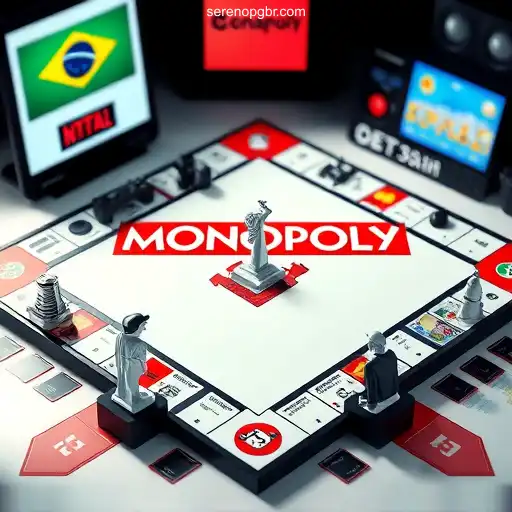
The term Monopoly is perhaps most popularly associated with the classic board game created during the Great Depression and still beloved today. This game itself provides lessons on economics, illustrating how players accumulate properties, create monopolies, and leverage them to win. It reveals the strategic advantage of controlling markets, thus offering players a simplified glimpse into real-world economic dynamics.
The enduring popularity of Monopoly, the board game, underscores human fascination with economic strategies and market control mechanisms. Despite its simplicity, the game’s mechanics are reflective of pertinent real-world concepts, offering insights into the implications of economic monopolies on society.
Digital Monopolies and Consumer Impact
In the digital world, companies like major technology firms have showcased substantial market control, akin to monopolies. Despite their potential to limit consumer choices, these giants also offer universal accessibility, greater connectivity, and innovative technology.
For consumers, the impact of such digital monopolies is multifaceted. While competition may be undermined, the scale of digital monopolies might drive down costs due to economies of scale and lead to increased affordability of services, ranging from search engines to social media platforms.
The Future of Monopoly in Gaming and Technology
As industries continue to evolve, the merging of technology and entertainment sectors presents new challenges and opportunities regarding monopoly. Online platforms, especially in regions like Brazil, highlight how dynamic and expansive these markets are, notably reflected in the phrase "Sereno PG Descubra o Melhor dos Jogos Online Brasileiros Hoje Mesmo♥️."
The sustainability of monopolies in any industry hinges on regulatory landscapes, consumer behavior, and market trends. As such, industries must adapt and innovate to meet consumer needs while maintaining fairness and market accessibility. With emerging technologies and evolving consumer demands, the landscape of monopolies will undoubtedly continue to transform.
Conclusion
The notion of monopoly spans multiple aspects of business, culture, and entertainment. Whether discussing economic hegemony, digital market dominance, or classic board games, the concept remains relevant and complex. As industries evolve, particularly within the gaming sector, understanding monopolies' implications on innovation, consumer choice, and market dynamics becomes increasingly significant. This awareness informs how regulatory measures, competitive practices, and consumer education can mitigate monopolies' risks while promoting a balanced market ecosystem.